Sunrises

Date: 15 February 2026
We have all been there, and I am sure it has happened many times … failure, not being 80% there, things just not clicking, just struggling for whatever reason, and so on.
This happened to me the other day, things were just not clicking as they have done in the past. I was actually even improving on my task and goal, but for some reason, I was going 3 steps back that day. I could have just ‘called it an early day’, but if I did that, I would be letting down the others that needed me there - good or bad, they needed me there. So I had to persist … not because of me, but because of them.
So what do I do when I have times/days like this?
In the moment: I focus on the process that has gotten me to where I am. I believe in the process to get me out of my rut. Post the task, I will reflect on the process to question if anything needs to change or if I need further help.
Post the moment: I get a good night's sleep. Over time, I have realized that I sometimes need to give myself a break, not be too hard on myself, but instead reflect on what I can learn from those moments, where I can improve, or simply say - it was just one of those days.
The best thing about a sunrise, is that it means it is a new day.
I also try to think long term, not get burnt out and keep things in perspective.
Here is an article from the NY Times on some other tips that high performing athletes use to help them with disappointment. I take excerpts on what I think are the key points
What Olympians Can Teach Us About Disappointment
Learning resilience
For top athletes, grappling with failure is a job requirement, said David Fletcher, a professor of human performance and health at Loughborough University in Britain. A key difference between the best athletes and the rest of us is that they see challenges as opportunities for growth rather than threats, he said.
While being naturally optimistic or conscientious helps, researchers say that to some extent, resilience can be learned.
The power of purpose
Research suggests that people who have a sense of purpose in life deal with stress more effectively. Dr. Gervais has athletes identify their goals beyond winning, such as achieving personal growth or representing a marginalized group. When an athlete’s motivations feel anchored to something bigger than medals, he said, “disappointment is painful, but it’s not terminal.”
Having multiple bars to measure success can help athletes to hedge against disappointment, Dr. Fletcher said, adding that the best athletes set what are known as process-oriented goals, meaning those within their control, as opposed to just performance-oriented goals, which are based on results. If they lose a race, they can still say they achieved other goals, like improving their technique, pacing or fueling strategy.
Grit as a team effort
It’s also critical to have supporters who care about the athlete as an individual, not just a performer, said Lauren Loberg, a mental performance coach who works with Olympians.
Acceptance is the goal
Today, these athletes appear to have arrived at some semblance of acceptance. If coming in ninth or fifteenth in the Olympics is “a low, you’ve got to put things in perspective,”
Powerful ideas:
Quotes from Sydney Harris
“Never take life seriously. Nobody come out alive anyway”
“Happiness is a direction, not a place”
“It’s surprising how many people go through life without ever recognizing that their feelings toward other people are largely determined by their feelings toward themselves, and if you’re not comfortable within yourself, you can’t be comfortable with others.”
“If a small thing has the power to make you angry, does that not indicate something about your size”
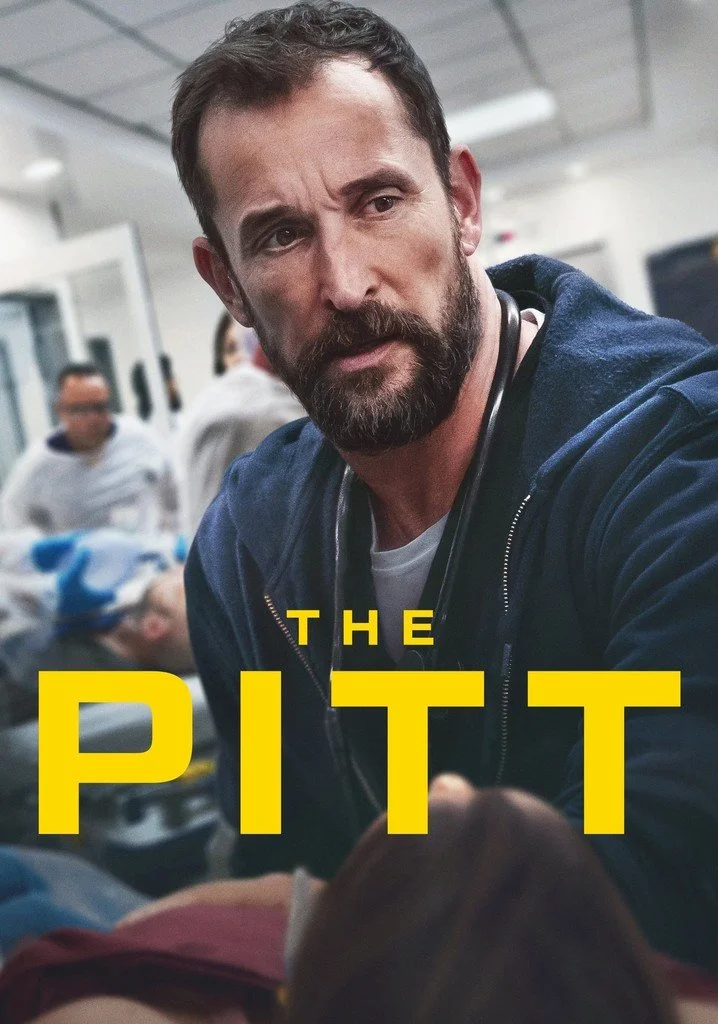
The Pitt
Date: 23 January 2026
The Pitt is an American medical procedural drama television series. Each season of the series follows emergency department staff as they attempt to overcome the hardships of a single 15-hour work shift at the fictional Pittsburgh Trauma Medical Center, all while having to navigate staff shortages and underfunding. Each episode covers approximately one hour of the work shift. The series has received acclaim from critics for its performances, writing, direction, format, and realism. The series has also been praised by the medical community for its accuracy, realistic portrayal of healthcare workers, and addressing the psychological challenges faced in a post-pandemic world. (source: wikipedia).
The Pitt is not for everyone, as it touches on some tough topics and difficult situations that occur in a hospital Emergency room, which can be disturbing for some people. Besides the acting, the appreciation of what all hospital workers do for us, their sacrifices and so much more, there are so many valuable lessons that one can get out of this series. The one lesson we can all learn from this show is the lesson of giving and listening to feedback.
As you can imagine, an effective team of people, trying to save a life, need to effectively work together for the cause of saving that life. Pittsburgh Trauma Medical Center is a US teaching hospital, where there is constant teaching for interns and residents … as well as attending physicians. The doctor that is leading the initial diagnosis is shouting out his/her evaluation while others listen, question and learn. When time allows, there is a debrief on what went well and what did not go well. The feedback goes top down and bottom up.
This topic of live and constant feedback led to a conversation I was having with someone about what is needed to take feedback - thick skin or humility? One may guide you to say that you probably need thick skin at the start of your career, but what do you really learn from being thick skinned? Will the feedback ever penetrate your ‘thick skin’? Real learning comes from being humble in listening to the feedback, reflecting on it and objectively deciding what of the feedback is correct. Sometimes the process takes time to realize the learning, and sometimes it is an ‘ah-ha’ moment where you learn right away. Bottom line, it is in your control on whether to be thick skinned or humble.
Remember
PAIN (feedback) + REFLECTION (humility) = GROWTH
Time and reflecting
PAIN (feedback) + THOUGHTLESSNESS (thick skin) = NO GROWTH
Powerful ideas:
As a leader, you may not be saving lives like the Doctors in The Pitt, but know that as a leader you are impacting lives by your behaviour, actions and words.
Bonus powerful idea:
The lead song in episode 1 of The Pitt is called Baby by Robert Bradley’s Blackwater Surprise. If you want to start off your day (or a meeting) in the right way, listen to this song every morning. Make sure you make time to dance in the streets of NY, Berkeley, Sharon, Bozeman, Palo Alto, London, Dubai, Gurgaon, Frankfurt, Singapore, Tokyo, Sydney or wherever you are, as the early sun rises.
Robert Bradley's Blackwater Surprise - "Baby" - Live in Bloomington 12.31.05
New Year’s resolution

Date: 05 January 2026
Resolution that everyone should have
It is that time of the year again where we make New Year’s resolutions. Some resolutions are big and reach for the stars, some are small, some we make and some we fall short of.
If there is one resolution I suggest we all consider is to Think Big, but Start Small. Another way to look at it is to build up the habits you need (start small) to achieve the ultimate goal you want to achieve (think big).
The example I use when I talk to people about this is an example of deciding to run your first marathon. For the purpose of the example, let's assume you are not even a runner and your schedule would only allow you to train in the morning. What is your first step in thinking big, but starting small? Your first step may be as simple as setting your alarm clock at a certain time and just waking up and getting out of bed. Do this for a period of time (e.g. a week) so the task of waking up early is no longer a task or a road block. The next task for the next 2 or 3 weeks could be to just go for a walk. Use the time to figure out how you will use this time effectively. Experiment with podcasts, music or just reflecting in preparation for the day. This is then followed by setting a running routine and so on.
Achieving your goals this way helps you build the habits (long term) that are needed to achieve your goals. The other benefit is that these tasks (however you break them down) are easily achievable. Don’t worry how you look today, but think about how you will look 3 months from now
Know that anything good requires hard work and effort. The hard work can come in the form of time, dedication, consistency, and just hard work. Know that the short cuts will usually have you failing over a period of time. “Efforts compound everyday” - James Clear
Finally, think of the compound effect of consistency equals intensity. You are better off being consistent, building up the habits needed, to win in the long run. “Embrace the boredom of consistency”, Juston Su
Wishing everyone a happy and healthy New Year, and for a better 2026 to all
“It is better to do less than nothing at all … no more zero days”, James Clear, author of Atomic Habits
“You are never too good to get better”, Juston Su’a Head of Mental Performance for the Tampa Bay Rays
6 principles of an elite mindset:
1️⃣ You’re never too good to get better.
2️⃣ Do what you do on purpose, with purpose.
3️⃣ Little by little, a little becomes a lot.
4️⃣ Focus on the process, not the results.
5️⃣ Embrace the boredom of consistency.
6️⃣ Learn from failure.
Can’t and Won’t, but did you try
Date: 15 December 2025
I recently read a story about a lesson one of the LA Lakers team managers learned from Pat Riley, the LA Lakers coach at the time.
The team had just landed in Washington DC at 01:30AM. That evening they had a game against the Washington Bullets (now known as the Wizards). The players were to check into their hotel rooms, get rest and be ready for the bus to take them to their shoot around practice at 09:30AM.
As they were leaving the airport, the team manager reminded Pat that he had organized the shoot around practice to take place at the Capital Centre, the home arena of the Bullets. The problem was that Pat Riley did not want to have practice in the opponents home arena, so he asked the team manager to find another place.
The team manager went on to say that he cannot do that. It is 01:30 in the morning and all the logistics would have to be reorganized. Pat Riley went on to say, “But did you try.” (Pat Riley used this phrase with his players when they said “but I can’t.” This was part of his coaching philosophy.)
The story ends with the LA Lakers having their shoot around practice at the basketball facilities of Georgetown University. The team manager tried, and found a way.
This reminds me of Yoda famously telling Luke Skywalker, "Do. Or do not. There is no try," meaning you either fully commit and do something, or you don't, as "trying" is just an excuse for potential failure and a lack of full dedication, implying that belief and action are key to succeeding with the Force.
Three key points here for me
At times, we all need to get rid of the phrases ‘cant’ and ‘wont’ from our lexicon.
Whether it is ‘to try’ or ‘to do’, just take the first step. As with a child learning to walk, the first, second, third … steps will be hard and not look good, but focus on where you will be and what you will have learnt in 3 months time.
Leaders need to create the culture of allowing people to try and do. Weigh the risks of the trying or doing, against the reward you, the person trying or doing, the team and the company will get.
Time and Reflecting

Date: 01 December 2025
At many points in our life, we all say “I wish I had more time”
We want the time to finish work, to exercise, to enjoy our hobbies, to try something new, to read … time to spend doing whatever it is that we enjoy and/or tasks to accomplish.
We also realize that we need more time to spend with loved ones, especially the ones we have not given enough of our time to, as well as to stop and regroup our thoughts, our mind and our actions … time to give to whatever it is that we as humans really need.
These days, what I enjoy most about the time that I have had is to be with loved ones, friends, colleagues, reading, playing tennis and to reflect.
But like most things, there are two sides to the coin.
With time, comes reflection. Reflecting can be so powerful. One concept I learned at Bridgwater Associates (Ray Dalio) is that:
PAIN + REFLECTION = GROWTH
At a recent presentation I made at a company offsite, I spoke about the PAIN I experienced in not making the ‘18-month’ mark at Bridgewater. But if I had not spent the time to reflect on what were my responsibilities for not making it, I would have never grown as a person and an employee. It took me a number of months to realize where I failed. Once I figured it out, it was a huge release for me and it set me free to grow from that experience. Even my wife noticed the change in me. When she asked me what I learned, I told her that you need to embrace your failures. She then gave me a huge hug, and walked away … for those that know me, you will know that this is a Dad Joke!!
The PAIN is the mistake or the failures one makes.
The REFLECTION is the why or how it happened. But the key here is in reflecting on your responsibilities, and not to blame it on someone else, a process or the company. We all have some responsibility in our mistakes.
The GROWTH is the learning
But having too much time to reflect is the other side of the coin, the dark side of the coin. The more time you spend here, the harder it is for you to get out of this space and move on. You need to reflect but you cannot let it control you. So how do you get out of it?
This is where you find the value of your networks. We all have, or should have, several networks that we lean in on when we need them. There is your ‘challenge network’ (Adam Grant), our most trustful and thoughtful critics. These are the people who really know who you are, those who will be honest becasue they care for your success and will help you grow. We have our ‘support network’ who are there for you during the hard times. They care for you, they help you think of your next actions - reminding you who you are, and they cheer you up during tough times.
My networks are made up of family, former bosses and business colleagues, friends and even new relationships that really know the ‘why’ of their roles has to do with the human side of their job. These networks have been invaluable to me during the darker times.
The best advice I have received from this network was to remind me who I am, and to use that as guidance on my next steps (thank you Ben).
A couple of excerpt and quotes from the book Eleven Rings - The Soul of Success, which I recently read and is one of my all time favorite books, that may also help:
Before enlightenment, chop wood, carry water. After enlightenment, chop wood, carry water. The point being: Stay focused on the task at hand rather than dwelling on the past or worrying about the future.
Being present in the moment as much as possible, not weighed down by thoughts of the past or the future.
“Forget mistakes, forget failures, forget everything, except what you are going to do now and do it. Today is your lucky day” - Will Durant
“We are all failures - at least the best of us” - J.M. Barrie
Is there really any other thought this week?
Date: 21 January 2021
'For there is always light, if only we're brave enough to see it. If only we're brave enough to be it'
How significant are you?
Date: 29 July 2020
Over the past year, I have been fortunate to meet, and in some cases, work with some amazing startup founders, successful entrepreneurs and so many hard working and passionate people who are doing amazing and significant work around challenges being faced in education, poverty, healthcare, and helping struggling young adults.
I always walk away being inspired when meeting these people and working with them. Some are at the start of their careers, and others are at, what most people would think, at the end of their careers. What they all have in common is their passion, relentless pursuit and vision to make the world a better place for so many people.
At the same time, I also walk away feeling very insignificant ... and I am, compared to what they are doing, or have done. During these times, I remind myself of a poem I saw posted at a summer camp for kids that is titled ‘Be the Best of Whatever You Are’ (see below).
It reminds me that I may not be as significant to many, compared to the people I am meeting, but I may be significant to one person I will interact with on any given day.
Be The Best Of Whatever You Are
By Douglas Malloch
If you can't be a pine on the top of the hill, Be a scrub in the valley — but beThe best little scrub by the side of the rill; Be a bush if you can't be a tree.If you can't be a bush be a bit of the grass, And some highway happier make;If you can't be a muskie then just be a bass — But the liveliest bass in the lake!We can't all be captains, we've got to be crew, There's something for all of us here,There's big work to do, and there's lesser to do, And the task you must do is the near.If you can't be a highway then just be a trail, If you can't be the sun be a star;It isn't by size that you win or you fail — Be the best of whatever you are!
How do you know when you have failed?
Date: 13 July 2020
Last week I dusted off my road bike and got back on the road after many months of not riding or exercising for a number of reasons, some of them being excuses.
As I started my ride, I quickly realized that this was not going to be an easy ride! Twenty minutes into my ride, I reached the hill I was regretting. Halfway up the mountain, yes, the hill turned into a mountain at this point, I was ready to just give up and walk the rest of the way. Then I remembered a saying I had heard many years ago about failure, ‘you don’t fail when you fall off your bike, you only fail if you don’t get up and ride again’, … so I kept going.
I have reached this point many times in my life, sometimes I kept going and plenty of times I did end up falling off my bike. The times when I did fall, I got back on the bike and never looked at my falling as a failure. Instead, it was just part of the journey. It was part of what was needed, in order to achieve a goal, and I have been fortunate enough to have had many people to help me during these times.
Keep riding!!
... hard to say
Date: 26 April 2020
This week, I saw a TED Talk titled “Good” and "Bad" are incomplete stories we tell ourselves by Heather Lanier. She starts off with a parable that has made me reflect on my past events and has me thinking about how I will see future events.
The transcript of her telling the parable is below.
Don’t forget, if you need a smile, watch the SomeGoodNews network
There's an ancient parable about a farmer who lost his horse. And neighbors came over to say, "Oh, that's too bad." And the farmer said, "Good or bad, hard to say."
Days later, the horse returns and brings with it seven wild horses. And neighbors come over to say, "Oh, that's so good!" And the farmer just shrugs and says, "Good or bad, hard to say."
The next day, the farmer's son rides one of the wild horses, is thrown off and breaks his leg. And the neighbors say, "Oh, that's terrible luck." And the farmer says, "Good or bad, hard to say."
Eventually, officers come knocking on people's doors, looking for men to draft for an army, and they see the farmer's son and his leg and they pass him by. And neighbors say, "Ooh, that's great luck!" And the farmer says, "Good or bad, hard to say.”
snoitseuQ
Date: 12 April 2020
Have you ever been afraid to do something you had never done before? During these times, I had more questions that had answers telling my why I could not or should not do it.
I was having a conversation with someone this week who wanted to start a business, but they had no experience with the industry. They had a passion and a purpose but they also had questions that told them why they should not do it. So we turned the questions around to ask, not why it cannot be done but how it can be done.
We are better off with questions we do not know the answers to, then answers we cannot question
Dare Greatly, Teddy Roosevelt
Date: 22 November 2019
It is not the critic who counts; not the man who points out how the strong man stumbles, or where the doer of deeds could have done them better. The credit belongs to the man who is actually in the arena, whose face is marred by dust and sweat and blood; who strives valiantly; who errs, who comes short again and again, because there is no effort without error and shortcoming; but who does actually strive to do the deeds; who knows great enthusiasms, the great devotions; who spends himself in a worthy cause; who at the best knows in the end the triumph of high achievement, and who at the worst, if he fails, at least fails while daring greatly, so that his place shall never be with those cold and timid souls who neither know victory nor defeat.
When was the last time you tried something new?
Date: 18 November 2019
A couple of years ago, I signed up for my first sprint triathlon which took place 6-months after I signed up. I know I will not have much trouble with the cycling or running sections (it may not look pretty but I will get through it) but it is the swimming section that concerns me because I have never taken any swimming lessons. My swimming stroke is best known as the surviving technique as this is the method that I taught myself as I literally jumped into the water many years ago.
This weekend, I had my first swimming lesson. Besides the instructor asking me if I was sure I signed up for a swimming lesson as opposed to a scuba lesson, it actually went better than I thought! I was as nervous, as were my 3 other classmates, but in the end we all survived. Each of us were at different levels, each of us had different fears and each of us had our own hesitancy but we all enjoyed and look forward to going back next week.
I have wanted to learn how to swim and do a triathlon for many years now and I ask myself why it has taken me this long to finally do it. Some of it had to do with just making the time, stop making excuses and just simply committing to it. But there was also the fear of doing something new for the first time. As we grow as adults, as we progress in our careers and as we are asked to act our age, that fear will at times stop us from doing something new for the first time because we are afraid of failing or even enjoying in being who we are or want to achieve. But I have learned over the years the pay back I get when I try something new outweighs the fear. I love the anxiety factor of preparing and committing to it, the energy is exhilarating. Most of all, I love the challenge to achieve and even over achieve. I have learned that we get over our failure by just practicing; practicing and practicing. Think of the first time you tried to kick a football or shoot a basketball or read a book, I am sure you failed but something kept you going. Confidence plays a big factor of course and at times we need to get this confidence on our own but hopefully there are times when others will help you get this confidence.
A couple of quotes that I think about and I have come up with
- Do or Do Not, but there is no Try … Yoda
- You don’t fail if you fall; you only fail if you do not get up
- Be comfortable being uncomfortable
Practice, practice, practice
Date: 15 November 2019
With winter upon us, people getting ready to receive EoY feedback and new resolutions in the works, it is time for each of us to decide how we want to change, improve and/or start afresh.
As you think about the changes, improvements or just fresh ‘restarts’ you want to make, do not forget the value in practice, practice, practice. We did it as kids growing up, learning to play a sport or a musical instrument and we tell this to our own children, but why do we not think about this and do it as adults? In my mind, I see the task of working on developing a new hard or soft skill as training a voluntary muscle into an involuntary muscle. For example, if I need to lift a heavy object, I would need to think, train and tell my brain and muscle what to do to lift this heavy object. This is all voluntary because I may need to develop the strength and skill to lift the heavy object or simply, I could also get someone else to do this for me. An involuntary muscle, like the heart and lungs, is a muscle I do not even think about, as it is natural. Another way to look it at this is that you want your new skills, your improved skill to be part of your DNA. But to get there, you need to practice, practice and practice until you are not thinking of it. The more you practice, the more it gets to be you, the less you need to think about it and you become that skill or ability you want to be.
I think we as adults are afraid of this because we are afraid to fail in front of our peers, our seniors, our co-workers and the people that work for us. We are afraid if others know what our failures are. But what if we had a culture of allowing us to fail safely and speaking openly on what we look to improve on.
If you think that would be tough, imagine if you are Gary Sanchez (NY Yankees starting catcher) waking up on Sunday and seeing this as the headline on the front page of the NY Times sports section:
Gary Sanchez Is One of Baseball’s Best Catchers, but there’s a Catch – Yankees catcher Gary Sanchez, among the best at his position, has been working on his one weakness: catching the ball.
16 personal development goals that will make you happier
Date: 21 May 2019
We all want to enhance the quality of our lives, become better people, achieve more, and overall be better rounded individuals. That’s why we set personal development goals.
Below you’ll discover 16 personal development goals that will make you happier
Become More Confident. Your self-esteem, or your self-confidence, is basically what you think about yourself: how competent you think you are in dealing with life’s challenges, and how worthy you feel of happiness and success. One of the reasons why bolstering your self-confidence is important is because is there’s a strong correlation between confidence and success.
In his book, “The Magic Lamp”, Keith Ellis refers to a study conducted in 1921 by Dr. Lewis Terman of Stanford University involving over 1,500 gifted children. The study revealed that IQ is not the most important ingredient for success. Instead, Terman found that there were three factors that were much more important than intelligence in determining success.
One of these factors was self-confidence (the other two were setting goals and persevering).
2. Improve Your Body Language. Body language is nonverbal communication which involves gestures and movements. Studies have shown that the right body language can help you with all of the following:
It can help you to connect with others and get your message across more effectively. It can communicate confidence and assertiveness. The right body postures can make you more persistent. Certain body postures can improve your performance. You can read about seven ways in which body language can positively influence your life here.
3. Learn to Get Along With Others. Yesterday I was watching a TV show called “Person of Interest”. One of the main characters–Reese–is working as a detective and his supervisor tells hims that he has to start meeting with a psychologist. During his first appointment Reese does the following:
He takes coffee for the psychologist. He notices a photograph of the psychologist with her cat and initiates a conversation about the animal. He leans in when he talks to her and tells her a personal story. The psychologist quickly calls him on it: He was trying to manipulate her by giving her a gift, talking to her about her interests, and simulating trust and closeness.I’m telling you this story as an illustration that there are things that you can do to create rapport with others. Of course, you should be honest and your objective shouldn’t be to manipulate other people, but it’s always a good idea to learn ways in which you can better relate and get along with others.
4. Stop Procrastinating. Procrastination has been called the thief of time, opportunity’s assassin, and the grave in which dreams are buried. Fortunately, procrastination is not a character trait, but a habit. And just as you learned the habit of procrastination, you can unlearn it. Make better use of the time that you have by overcoming procrastination.
5. Become an Early Riser. There are many benefits to becoming an early riser, including watching the sun rise, getting some early morning exercise, being able to work on a project just because it’s important to you before the day officially gets started, and so on. In addition, studies show that early rises are happier, healthier, and more productive than their late rising counterparts.
6. Become More Proactive. In his best-selling book “The 7 Habits of Highly Effective People”, Stephen R. Covey explains that the first habit of people who accomplish what they set out to do is that they’re proactive. Proactive people do the following:
They see themselves as being the creators of their lives. They don’t identify themselves as victims of external conditions. They don’t allow others to dictate their fate. They take responsibility for the results that they get. If you’re going to create the life that you want for yourself, you need to be proactive.
7. Acquire Conflict Resolution Skills. Conflict is a part of life. After all, people can’t be expected to agree on everything (I once read that if two people always agree, one of them isn’t necessary). The question is whether conflict–when it arises–will be resolved effectively or lead to discord.
Having the ability to resolve disagreements rationally and settle disputes amicably will make you happier and more successful.
8. Release the Past. Most of us are haunted by the ghosts of our past: that opportunity that we let slip by; those kids who bullied us in the playground; that love interest who left us for someone else; that professor who graded us unfairly; that parent who was constantly putting us down; and so on. In order to be happy in the present, we each need to release the ghosts of the past.
9. Read More. You may have heard that knowledge is power, and one of the best ways to acquire knowledge is by reading. In addition, researchers have found that gaining new knowledge can satisfy our need for competence, which makes us happier.
Read books that will help you to learn skills that will allow you to do better in life. Here are three examples:
Read business books to improve your performance at work; Read parenting books to be a better parent; and Read personal development books to become better at setting goals, coping with setbacks, dealing with perfectionism, and so on.
10. Become More Resilient. Resilience is the ability to overcome adversity. It’s the difference between facing your problems bravely and confidently, and feeling helpless and like you can’t move on. Fortunately, you can learn how to bounce back from any problem or challenge stronger and smarter.
11. Manage Stress Effectively. Stress is the body’s reaction to anything that requires a response. Feeling stress can keep us alert and motivate us to pursue our goals. However, if there’s too much stress this can lead to distress. Distress can cause headaches, elevated blood pressure, and chest pain. It can lead you to have problems sleeping and can even make you sick.
Knowing how to manage stress effectively–using good stress to learn and grow, and being able to release stress once it starts to reach a negative level–is vital for personal development.
12. Overcome Limiting Beliefs. Limiting beliefs keep us trapped in our comfort zone and prevent us from trying new things and taking risks for fear of getting hurt. We can have limiting beliefs about anything–money, success, relationships, and so on. You can even have limiting beliefs about yourself and what you’re capable of.
Allowing limiting beliefs to hold you back is not sexy, and it certainly will not make you happy. Identify your limiting beliefs, overcome them, and replace them with positive beliefs that will allow you to achieve what you want from life.
13. Increase Your Willpower. Willpower is essential to your ability to accomplish anything worthwhile. It influences your health, your finances, your relationships, your professional success, and all other areas of your life. Whatever goals you’ve set for yourself, you need willpower in order to achieve them.
14. Become More Mindful. Being mindful helps us to recognize the abundance and the good that is already present in our lives. However, we spend a lot of time thinking about things that aren’t happening in the present moment: remembering the past or thinking about the future. This is called mind wandering. In addition, psychologists have found that mind wandering makes us unhappy.
An important component of happiness is learning to live in the moment; that is, becoming more mindful.
15. Learn to Make Better Decisions. I’ve written several posts on this blog on how to make better decisions. That’s because the choices–or the decisions we make–determine the quality of our lives and the outcomes that we get. Our decisions shape our lives, so the better you get at making decision, the better your life will be.
16. Work on Your Attitude. Your attitude is your state of mind. It’s also the way in which you respond to situations and to other people. One of the best ways to get what you want from life is to constantly adopt the attitude that is most conducive to getting you what you want.
#thoughtfortheweek
The Journey Begins
Date: 26 April 2019
Thanks for joining me!
Good company in a journey makes the way seem shorter. — Izaak Walton