I Believe in You
Date: 23 March 2026
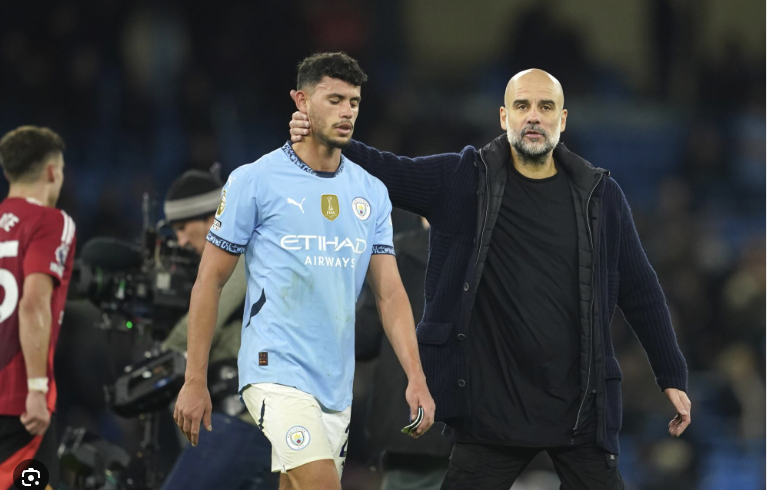
I recently saw a post featuring a viral clip from University of Maryland women’s basketball’s NCAA Tournament second-round preparations on 22 March 2026, capturing University of Maryland women’s coach Brenda Frese intensely motivating star guard Oluchi Okananwa during a timeout, lip-read as “I believe in you, but you’ve got to want this moment.” Okananwa, a standout Duke University transfer averaging 18.7 points and earning AP All-America Honorable Mention honors, later praised Frese’s tough-love approach in a follow-up interview, stating she “loves to be coached hard” daily, which has fueled Maryland’s 22nd tournament run under Frese.
Some people will agree with this approach and some may not. Regardless of the approach, it is the 4 words of ‘I believe in you’ that has stuck with me. I then asked myself, how many times have I told my teammate or a person that reports to me that I believe in them … and I do not mean during good times, but more importantly and more critically, during the bad times he/she/we are having.
We all have our bad times and as managers and leaders, our people will have their bad times. If you cannot support or encourage your people by saying ‘I believe in you’, then maybe it is time for a dialogue to understand the root cause of the ‘why not’, or it is time for a change.
Principles
Date: 15 March 2026
At the start of my career, my first Myers-Briggs test showed that my extroversion:introversion type (defined as how I get my energy) swayed heavily to introversion. I then received the first honest feedback from my boss after I was promoted to managing people, which was that the people who worked for me wanted to know that they were working for a human, someone like them. I am paraphrasing here as the feedback was 30+ years ago. He suggested I add pictures of my family at my desk, which I did not do, but the feedback has stayed with me throughout my career. Good or bad feedback, one that stays with you for so many years, is pretty powerful.
My next few sets of Myers-Briggs tests (I took 3 or 4 after the first test), still had me as an introvert, but slowly moving to the middle. I was making progress but I remember that it was very hard, both physically and emotionally draining at times. But I kept trying.
On reflection, this was the right feedback at the time and I am grateful for the honesty. The feedback helped me understand that I needed to connect with the people I was given the responsibility to manage and lead.
As my career progressed, my role as a manager and leader grew not to manage and lead for my small team, but as being part of executive committees, leadership teams, and a Board member, I was now making decisions with others on how to manage, lead and impact many people. This is where I really struggled in having a voice. All of a sudden I was surrounded by people so much technically smarter than I was, and my natural ‘introversion’ person came out in full force! What I mean by this is that my voice just went quiet and at times ‘silent’.
I then joined Bridgewater Associates, where I heard and learned of this concept called Principles. Ray Dalio, founder of Bridgewater Associates, ran the company by his ‘Principles’. Bridgewater is a tough place to work at, for reasons I will not get into here, but it was an experience that changed who I would become. That is because the concept of having Principles gave me a voice and the comfort of being an introvert.
My biggest fear in having a voice with people who were so much smarter than I was at the time, was that I did not want to be wrong. What I learned by using my own set of Principles, was that these personal Principles were what I believed in, the foundation that made me who I am and the guide on how I make my decisions. My mindset and conversations changed from ‘who is right’ to ‘this is what I believe in, this is how I make decisions’. I, or my ‘voice, no longer worried about being right or wrong, but instead I would open a dialogue on the Principles I, or we, would use to make a decision. This helped me find my voice!
But it did not stop there. One of the key concepts I learned from working at Bridgewater was that it is easy to agree on Principles at 30,000 feet, but until you have a dialogue on what you mean by your headline Principle (30,000 foot Principle), you will never get in sync on the Principle. Let me give you an example - I am sure most of us will agree that having transparency is a Principle that we should have at work. We want transparency from an executive team and from each other. After all, transparency builds trust. But is your definition of transparency the same as mine? What if our review sessions were recorded and shared with others? This would fall in the principle of transparency, but how many of us would be comfortable with that? If you have a close knit team, that works to truly help each other get better, which in turn will make the team better, there could be huge value in this … if used the right way. You can have others see your strengths and weaknesses and help out where and when you need help, and where they may need help from your strengths. That being said, I know that this is not an easy type of transparency some people, if not most, will be comfortable with.
This is why Principles need context. We all come from different backgrounds, different life experiences, different family responsibilities and we are at different stages in life and career. For example, today I have zero problem if someone says to me that I am an a-hole, but know that my next question will be to explain why. In my earlier part of my career, I know that my mindset would not be this approach but having a set of principles has really changed who I am and how I look at work and life.
My key message here is to have dialogue with yourself and your team on what the headline Principle really means. This way the 30,000 foot headline will have an actual meaning to it. The headline Principles should never really change - We operate as a transparent organization - but the meaning of what transparency is, will continue to grow as you as a person, and/or your team, grows.
What to do next
Write your headline Principles on
How you live, or want to live life
How you want to be seen as a manager and leader
How you want to be as a parent
Review your Principles
Do not underestimate how challenging it will be to live your principles on a daily basis
Explain, give context, to your headline Principles
Review them to make sure they have enough detail that anyone can read them and know who you are
Do this with your team
Do not tell them your Principles, but have them write up their own Principles
You can always object or add any key Principle that may be missing
Powerful ideas (worth repeating again):
“The greatest enemy of learning is knowing”, John Maxwell
“Be who you are and do what you do, as long as you’re here for the team.” Pete Carroll
Do not look to shine, look to make the guy next to you shine, France Rugby team
“Don’t worry about the level of individual prominence you have achieved; worry about the individuals you have helped become better people.” - Clayton Christensen
“There is no limit to what a man can do if he doesn't mind who gets the credit” - Ronald Regean, a sign he kept on the Oval Desk
“The lessons we took from our playing days still feel just as relevant now: staying composed under pressure, leading with purpose, and surrounding yourself with great people.” - Dan Carter, NZ Rugby
Ideas are easy, execution is hard, a phrase we used at Builder
The two most powerful warriors are patience and time
You can learn more about this through Ray Dalio’s book called Principles. There is also the book called The Fund which talks about the other side of Bridgewater.
Who is flying, and landing, the plane?

Date: 09 March 2026
I have always enjoyed using the analogy of flying a plane to explain or clarify a complex or unfamiliar concept by comparing it to a familiar one (I also use ‘building a house’ at times).
Some examples of flying a plane, I or others have used:
Building a ‘hyper-growth business’: Flying a plane while trying to fix it at the same time - used for a situation where a person or organization must develop, modify, or repair a critical project, system, or strategy while it is already in use or operational
Principles: At 30,000 feet, we all agree but you need to get to 20,000, 10,000, 5,000 feet to truly get in sync with each other - We can all agree on a ‘top line’ statement about culture or a principle, but because we are all different (different upbringings, backgrounds, beliefs, …), you really need to deep dive into the ‘top line’ statement to get to an understanding of how we each see the statement.
I will talk more about this in next week’s Thought-for-the-Week
Who is flying, and landing, the plane in your organization?
I have recently read several articles on executive hiring, team composition, and effective teams. The articles each highlighted the importance of having a diversity of abilities, skills and experience on the team. In other words, if the team is full of people with the same experience, how will the team perform when the situation calls for a different experience or perspective? If the team is filled with a diversity of experience, how will the team perform if there is not the respect for the attributes each person brings to the table?
The usual starting point - though I would argue the mandatory starting point - would be in the vision or goal one is trying to achieve. We are not all visionary; some of us cannot see past this week, let alone 2 years from now. We are not all motivational and effective communicators; the voice that will inspire and get people behind the idea or keep the energy level high when things look hard. This is the person that I say is flying the plane at 30,000 feet. He/She sees the future better than others can see it.
But what does it take to ‘land the plane’, and go from 30,000 to 20,000 to 10,000 to 5,000 feet to touch down. It will most likely take different abilities, skills and experience. This is where the diversity of the team pays off. Here is where you may want, and need, the detailed oriented person, the stakeholder manager, the project manager, the engineer, … The point being is that the person flying the plane at 30,000 feet may not be the right person to land the plane.
Of course, there are exceptions where you have that one ‘unicorn’ individual that can do it all, but this is most likely not the norm, and is a risky long term strategy. There is also a balance. Sometimes we do not know how much we can achieve, but the person flying the plane sees what is possible and pushes us to achieve things we did not realize we could achieve. One other factor is that we all have different risk appetites. So how do you as a leader manage this?
Set the goal, guide the team, support and motivate the team, lean in and get your hands dirty when your experience and/or confidence can help the team get unstuck. But know when to hand off to the next level. You do not have the confidence in the hand off to the individual or team, then you did not build the right team.
Powerful ideas:
“The greatest enemy of learning is knowing”, John Maxwell
“Be who you are and do what you do, as long as you’re here for the team.” Pete Carroll
Do not look to shine, look to make the guy next to you shine, France Rugby team
“Don’t worry about the level of individual prominence you have achieved; worry about the individuals you have helped become better people.” - Clayton Christensen
“There is no limit to what a man can do if he doesn't mind who gets the credit” - Ronald Regean, a sign he kept on the Oval Desk
“The lessons we took from our playing days still feel just as relevant now: staying composed under pressure, leading with purpose, and surrounding yourself with great people.” - Dan Carter, NZ Rugby
Ideas are easy, execution is hard, a phrase we used at Builder
The two most powerful warriors are patience and time
The Magicians
Date: 19 January 2026
My Thought-for-this-Week was going to be about the TV series The Pitt and feedback, but after reading Heather Cox Richardson's, the American Historian and Professor of History at Boston College, daily blog called ‘Letters from an American’, I thought it best to share her blog with everyone here.
In her January 18, 2026 blog on substack, she writes about the heroes who are “flawed human beings choosing to put others before themselves, even at great cost, even if no one will ever know, even as they realize the walls might be closing in around them.” She highlights people like Dwight D Eisenhower, Anne Frank, John Hancock, Sitting Bull, Rosa Parks and of course Dr. Martin Luther King.
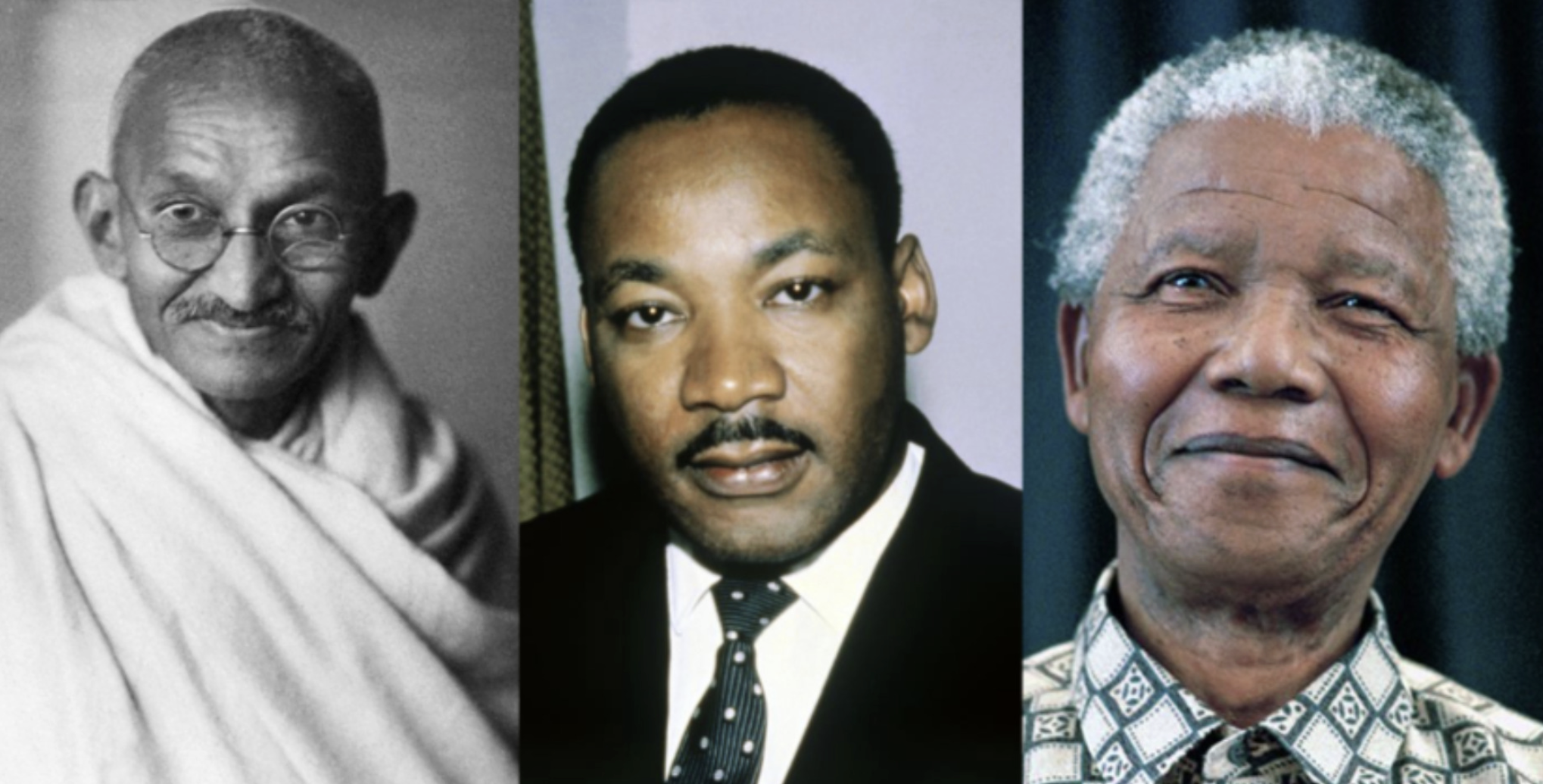
When I read any writing from or about Dr. Martin Luther King, I am reminded of a document Julia Noakes, an international corporate psychologist focused on executive team development and leadership shared with me at DB called ‘Stages of Leadership’. Based on research done by David Rooke and William Torbet, published in the Harvard Business Review, the document lays out the different layers of leadership one goes through, and the percentage of the population that achieve each state. You can also look at this as one’s development as they go through their career. It goes from the first stage of leadership - The Opportunist - to the final stage of leadership - The Alchemist … or as Julia described it, The Magician, which is how I like to describe it. In their research, only 1% of the studied population reached the Magician stage. Julia described this stage of leadership being accomplished by people like Gandhi, Nelson Mandela and Dr. Martin Luther King. The simple way I think about these Magicians was that their purpose was so much bigger than themselves.
We do not all have to be, or can be, a Dr. Martin Luther King, but as leaders we can all be Magicians to our families, friends and to the people whom we have been given the honor to lead.
Powerful ideas:
“ … that only when it is dark enough, can you see the stars.”, Dr. Martin Luther King
Norms arise out of core beliefs. These norms are deeply embedded within organizations and shape the unconscious, taken-for-granted behaviours that constitute the essence of organizational culture. - Edgar Schein, professor emeritus at MIT
“Choose the harder right, instead of the easier wrong”, West Point Cadet Prayer
If you would like a copy of the Stage of Leadership documents that was shared with me, feel free to message me.
The Pass
Date: 12 January 2026
I do not believe that there is one form of leadership ‘style’ that we all need to have or be like. A situation may call for a certain style that may not be you. A true and confident leader will see this and at times step back to let someone else lead. This is what I call the Leadership Pass.
My office set up changed over time. I now try to have a round table in my office. The reason why a round table is important for me, is because a round table does not indicate who the leader is. At times when I cannot have a round table, I then ensure that I do not sit at the head of the table, unless I need to lead. We cannot, nor should not, lead every situation. If we do, our team will never grow. We cannot, nor should not, take credit for success. If we do, our team will never feel valued.
Behaviours drive the culture of the organization. It is not the words that the leader or leadership team states, but it is his, her, their behaviors that drive the culture of the organization. If behavior does not follow the words said, then future words become empty. I have seen both sides of these behaviors. The leader that sets the right behaviors, and the leader that passes when they can and should, is the organization and culture that I have enjoyed being at and thrived in.
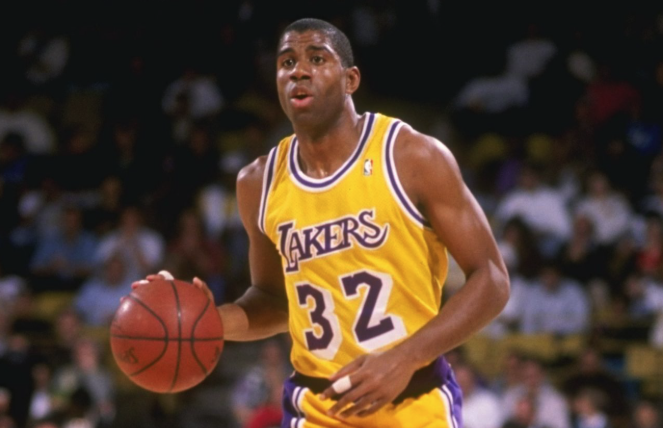
Magic Johnson made the basketball pass exciting and a skill (‘behaviour’) future basketball players tried to perform (here is one video of Magic Johnson's Most Memorable Passes). You as a leader can make Leadership Passing exciting and a behavior throughout your organization.
An Inc. article to share:
Great Leaders Share 3 Rare Behaviours. Most Bosses Skip All of Them
Powerful Ideas:
“Don’t worry about the level of individual prominence you have achieved; worry about the individuals you have helped become better people.” - Clayton Christensen
“Do not look to shine, look to make the guy next to you shine”, - France National Rugby team before a Six Nations match
“There is no limit to what a man can do if he doesn't mind who gets the credit” - Ronald Regean, a sign he kept on the Oval Desk
“Be who you are and do what you do, as long as you’re here for the team.” - Pete Carroll
“Think lightly of yourself and think deeply of the world” - Miyamoto Musashi
The Benefits of Juggling while Blindfolded
Date: 24 October 2020
I bring together two stories in this thought-for-the-week. The first story comes from a comment a professor from my Executive Management program told us around the topic of prejudice, ‘We all juggle our prejudices’. The second story comes from the final chapter of Malcolm Gladwell’s book Blink where he talks about blind auditioning. I have reflected on these two stories, along with my many experiences and learnings I have had in my life and career, to help me make better people decisions. One example being in the hiring for a particular role and how I assess the ‘what’s’ to determine who I hire.
First on the prejudice comment. This statement has stayed with me for many years, and I use it to challenge my people decision making. It is hard to say that we do not have prejudices – defined as ‘preconceived opinion that is not based on reason or actual experience’. We all have had an, or many, experiences that have potentially led us to have a preconceived opinion that is not based on reason. We all, at times, have listened to a single side of a story that has led us to have preconceived opinion that may not be based on reason or facts. We all have been brought up in different ways, read different books, watched different TV and interact with social media in different ways. Based on this, it is hard to say we do not have any conscious or unconscious prejudices. How I have challenged myself to ensure I am not making a decision or having a view because of my prejudices, is by asking myself, ‘Am I just juggling my prejudices here?’
Malcolm Gladwell’s book Blink is about how we think without thinking, about choices that seem to be made in an instant – in the blink of an eye – that actually aren't as simple as they seem. His last chapter is how one of the German Orchestras (I think it was the Berlin Orchestra) was holding an audition for a tuba player. The judges decided to hold a blind audition by having each musician perform behind a barrier so the judges can just listen to the sound being performed. Each musician was identified by a number (e.g. #123) as opposed to their name. When the judges decided who the best sounding tuba performer was, they asked for Herr #123, but out came Frau #123. The judges apologized and said they had asked for Herr not Frau #123. Frau #123 politely said, I am #123 and I am Frau #123.
I have used these two stories, plus the good and bad that I have learned over the years in hiring across multiple organizations, to first define ‘why’ I am hiring, the ‘what’s’ of what one needs to hire, and ‘how’ each of these ‘what’s’ will be assessed.
What are the ‘what’s’? The best set of ‘what’s’ that I have learned and used, is what I was taught at Bridgewater by my team. We first define the role and then define what Values we except for our culture, what Abilities are needed for this hire and what Skills are needed with this role ... all for today and the future. I have since added to define the first 6-month objectives for this hire. I then chose the people who are best placed to interview for the defined Values, Abilities, Skills and 6-month objectives. To avoid the common feedback of, he or she is a ‘nice guy’, I ask to hear not just the pros, but more importantly, the cons of the candidates. It is rare to have the perfect candidate, so assume your candidate will come with some faults. Knowing the faults will help you as a manager, manage that person to help her / him succeed. After-all, why make the hire, if you as a manager are not going to help them succeed?
Voting in the upcoming US elections
As I think about the 2020 Presidential election, I will use the Values, Abilities and Skills thinking to help me make my decision on who I will vote for. For me, the role of President of the US is a very complex. As I see it, one is leading 330 million people, of all genders, color, religions and beliefs, each having different needs and wants. The role needs to work with the different branches of government and bring them together to actually get things done. For me, the role requires global thinking and collaboration. It requires one to make the right long-term decisions for the next generations in the US and across the World. Most importantly, I try to assess how he or she makes decisions, in other words, what are their decision-making principles. This is important because this leader will be faced with many novel challenges and how they make decisions, will be an example to us all. I do not assume that all my needs, wants or beliefs will be met by anyone person, but, I do believe in the framework I outline above to make my decision.
We may not agree on what the role entails but whatever your views are, however, you define the role, just make sure you go out and vote, but try and vote with what you think the right Values, Abilities and Skills are needed. Whatever the outcome, wish us well.
Person of the week
One of my favorite podcasts is Hidden Brain. Shankare Vedantam uses science and storytelling to reveal the unconscious patterns that drive human behavior, shape our choices and direct our relationships. At the end of his podcasts, he talks about an unsung hero. I would like to follow his lead and mention a Person that is in my thoughts because of who they are.
The Person of this week is Albert. I met Albert while I was working at HSBC in London. Everyday Albert wore a uniform and always had a smile. Based on his ‘job’, I am going to assume that his main role in his written job description was to organize the mail for the trading room. But Albert was so much more than that. He did not follow what was written as his job description, because he was goal oriented. Albert saw his goal as making sure everyone had a good day. He ensured everyone on the trading floor had the resources they needed, rooms and meeting areas were organized, helped with so many issues (work and personal) because he knew one did not have the time, and he made sure we all experienced a smile in their day.
Thank you, Albert, and to all the Alberts out there, thank you. You always made my day.
Who is responsible for learning?
Date: 24 September 2020
If you believe that as a parent, a manager or leader you have a responsibility to teach, read on. If you do not, then this thought-for-the-week is not for you.
I love learning from people who look at things in a different way and are not afraid of trying new ‘ways of doing’.
This past weekend, I listened to an episode of NPR’s (National Public Radio) Podcast: The Hidden Brain, titled – When Everything Clicks: The Power of Judgment-Free Learning.
The focus of this podcast is on the role and responsibility of the teacher in learning and on a very different way of teaching.
It is the teacher who designs the world in which the student learns. A critical role is in designing the learning experience that it is natural, commonplace, eliminates all the noise in learning and provide objective and instantaneous feedback.
The podcast will explain it better than I can, but if this topic interests you, I encourage to listen to this podcast (51 minutes).
To all the Darlene’s I have interacted with, thank you. You will need to listen to the end of the podcast to understand this.
P.S. A thank you to my wife, Lauri, she always recommends the best podcasts for me to listen to and the best books to read.
Do as I say, and not as I do
Date: 02 August 2020
I remember teaching my first child how to drive. I would tell him all the basics – stay focused, keep two hands on the steering wheel, do not multi-task and keep your eyes on the road. I did this while having my window open, my arm out the window, changing the channel on the radio and steering the car using my wrist. All I was missing was the dangling cigarette in the corner of my mouth while eating a sandwich. As I realized what I was doing, I told my son, ‘do as I say, and not as I do’.
I may be exaggerating a bit, but I know this was not the first time I was being a hypocrite. This moment, and its visual, has stuck with me. Since that day, and especially as my children were becoming adults and can see all my faults, I wanted to make sure my moments of ‘hypocrisy’ were fewer and fewer in all that I did.
The other day I was having an email conversation with a new ‘colleague’. Our working relationship was fairly new, and we were still getting to know each other, virtually. The email this person sent was on a deliverable that I owed him. He then quickly followed up with a second email to ensure that I understood the intent of the first email, and that the email was not supposed to have ‘teeth’.
I started laughing right away and sent him my blog on Content vs Style, and went on to say that I read the content of the email and not the style – and by the way, he was 100% right in the content.
Unknown to me, one benefit I have achieved from writing my ‘thought-for-the-week’ blog, is that they have also helped me reduce my moments of hypocrisy and have kept me accountable to myself.
Leading through a Crisis
Date: 18 May 2020
During March and April, I participated in a Harvard Business School (HBS) series of webinars on Crisis Management for Leaders. The webinars were led by HBS faculty, with over 2,000 HBS alumni from around the world participating. Each hour and a half session was presented via Zoom web-conference to the alumni community, and is now available in recorded format via this link to all.
I share with you my summary of three webinars that pertain to how one leads in a crisis, how teams work during a crisis and a HBS Case Study on the Chilean Mining Rescue of 2010.
My key learning from the webinars relate to the importance of 1. Leading with values - In the crisis situations we reviewed, all the leaders led with their values and/or the values of the organization.2. Innovating - When innovating, uncertainty goes up, but if done correctly, learning will increase. Due to uncertainty, it is best to lead and innovate using lean and agile practices. 3. Effective leadership traits - Productive communication is about being direct and honest, while providing hope (The Stockdale Paradox). Ensure that all voices are heard. During certain times, get out of the way and be guided by the subject matter experts.4. Empathy - It was inspiring see, the leaders we reviewed in each case and the business leaders on the call, all led the crisis they were facing with empathy of the situation and towards the people that were being impacted.
I hope you enjoy them
hbs-covid-19-as-a-novel-event-and-risk-management-framework-v1.00-20200325Download
hbs-structuring-the-organizational-response-v1.00-20200402Download
hbs-case-study-chilean-mining-rescue-and-summary-v1.00-20200410Download
To be mostly aligned
Date: 21 April 2020
A number of years ago, I was asked to present the topic of Digital to a senior executive committee. The guidance I was given was that I had 15 minutes, that was it.
Digital is a very broad topic as one can talk about many of its subtopics for hours. I could have used my 15 minutes giving the committee an overview of what digital is, what digital projects I was working on at the time, or what the future may look like. In the end, I decided to have the focus of my presentation be on a request I needed from them.
I started off with a bit of education and context setting. I explained that Digital is part of one’s strategy, marketing plans, operational efficiencies projects, client and employee connection, data and much more. I then gave some examples of ‘startup’ digital initiatives that had been successful in large enterprise organizations. I explained the many reasons why these initiatives were successful, as well as explaining the importance of accepting failure to gain learning through a number of inspirational quotes. Then came my request, the one action I needed from them that I was not able to do myself.
Before my presentation, I sent the group an article by Ken Perlman, an engagement leader at Kotter International, titled The Disastrous Effects of a 'Mostly Aligned' Executive Team. As Digital becomes embedded in aspects of our work life, our interactions with clients, our ways of working and our learning, it is challenging to come to an agreement across a global enterprise organization to move in a certain direction. My request was for them to spend time working on getting into alignment with certain Digital topics because if they did not, then the thousands of employees that work for them would be going off in multiple directions, creating inefficiencies across the organizations, with employees and clients.
The disastrous effects of being mostly aligned, whether it is with an executive team, a team you lead or are part of, and even just between two people, is costly, a time waste, can create unnecessary assumptions and builds bridges that do not connect. The time you spend in getting in sync, will be time well spent in the long run.
The best time to plant a tree was 10 years ago, the second best time to plant a tree is today
Date: 13 March 2020
First of all, I hope you, your families, friends and colleagues are healthy and doing as well as possible.
At the risk of getting overloaded with yet another Coronavirus article, here is a Harvard Business School article - ‘How Chinese Companies Have Responded to Coronavirus’.
The article highlights 12 business lessons on how Chinese companies have prepared for and / or are preparing for the recovery. As we all know, China is in the front of experiencing and dealing with this crisis, and as they start showing signs of recovery, they are in front of business recovery plans.
The overarching theme that I get from this article is that it is even more important than ever before, that we change our Ways of Working to be Lean and Agile, especially in times of uncertainty, i.e. if you were a startup (we also need the right level of leadership in caring for the people and guiding us to the light at the end of the tunnel … as we will get through this).
Organizations, eco-systems, groups that have been practicing lean and agile methods are obviously ahead of the game. In other words, they planted their trees already, they are getting feedback from their tree on what is going well and what is not, they are adjusting and those trees are growing as expected or in different ways. Those that have yet to transition and implement these Ways of Working may be worried in the short term but need to focus on the longer term and start planting your trees today.
But it is not just about obtaining the Lean and Agile Ways of Working playbook that will solve the problem. One needs to practice it over and over again and continue to make improvements, adjustments and innovate. This reminds me of one story from the book - ‘The Lean Enterprise - How High Performance Organizations Innovate at Scale’ by Jez Humble, Joanne Molesky & Barry O’Reilly (great book). The story is from Toyota’s origins when it used to build its own automatic looms (the color coded wiring for a car’s electric system). Toyota had one of their loom plan stollen and upon hearing this, Mr. Kiichiro Toyoda is said to have remarked the following:
'Certainly the thieves may be able to follow the design plans and produce a loom. But we are modifying and improving our looms everyday. So by the time the thieves have produced a loom from the plan they stole, we will have already advanced well beyond that point. And because they do not have the expertise gained from the failures it took to produce the original, they will waste a great deal more time than us as they move to improve their loom. We need not be concerned about what happened. We need only continue as always, making our improvements.'
If you need help in planting your Ways of Working tree, or do not know where to begin, below are links to two coaches that can help. Or feel free to contact me if you want some guidance.
Stay safe, be smart and be kind to each other
'I have a dream, not I have a plan'
Date: 08 March 2020
What inspired me this week - The Why?
This week I spent some time doing some work with one of my mentors. I am constantly impressed by how hard he works, how he is constantly learning and how he sees things that I just do not see. But the most impressive trait that inspires me about him, is the ‘Why’ of what he does.
We were talking about a new idea he has and he spent time not on what it is, how to execute it, who to sell it to or how to profit from it. Instead, he just spoke about the purpose - the Why - of the idea. But it was not just about his purpose or ‘Why' he needs to do it, instead the purpose is why we all need to do this.
I find this trait about all the people I call my mentors. They are driven by a purpose. What they do or what they create (or try to create) is driven by Why it needs to be done.
Motivate your team, your children, your friends, anyone not by what to do or how to do it but why they should do it.
A great TED Talk to watch about the Why:
Simon Sinek, is an American author (British) and motivational speaker. He is the author of five books, including Start With Why and The Infinite Game (https://simonsinek.com) https://www.ted.com/talks/simon_sinek_how_great_leaders_inspire_action?language=en
Finally, in celebration of International Women’s Day, check out this great venture called The Wing. It is a growing community of women across the country and globe, gathering together to work, connect and thrive
Excuses
Date: 23 February 2020
If you have not seen the HBO documentary titled 'The Inventor: Out for Blood in Silicon Valley’, you need to watch it (https://www.hbo.com/documentaries/the-inventor-out-for-blood-in-silicon-valley). The story is about Elizabeth Holmes (https://en.wikipedia.org/wiki/Elizabeth_Holmes) and her rise and fall in Silicon Valley due to her ‘deception’. I watched the show a number of years ago and it has stayed with me.
One of the interviews in the documentary is with one of her Stanford Professors, Dr. Phyllis Gardner, MD, Professor of Medicine. She is interviewed in a couple of segments but towards the end of the documentary, Dr, Gardner talks about the ownership of issues / problems. She goes on to say, [as if she were speaking to Elizabeth]:
Don’t blame anybody else. You have full control. The bucks stops there (as in with you as CEO). People make mistakes, but you must always admit it
Dr. Gardner goes on to say that one of her husband’s favorite line is:
‘Excuses are like a..holes, everyone has one'
I now think of this line when I use the word excuse or but.
Definition: Excuses - attempt to lessen the blame attaching to (a fault or offense); seek to defend or justify.
One of the best pieces of counterintuitive advice I have ever received
Date: 19 July 2019
I have started reading Robert Glazer's Friday Forward blog and this week's blog reminded me of the best counterintuitive advice I ever received. (I also share Robert's blog below).
About 25 years ago, when management / leadership style was all and purely about results, numbers, profit, working people hard and giving people a hard time when they do not perform, my manager gave me the following advice when one of my team members was not performing well ... He said that maybe I should give him a hard time when he is performing, confident, upbeat about himself and comfort him when he is not performing and down on himself. This was very counterintuitive at the time and based on what everyone else was doing.
I am glad I was a person who listened, reflected and tried to understand any advice, feedback, criticism and viewpoints because that advice has never left me and has made me the leader / manager I am.
Thank you Danny
Robert Glazer's blog below, posted on 19 July 2019, reminded me of this moment.
Going Down - 7/19/19
Last week, I wrote about my grinding climb up Grouse Mountain. Fortunately, I didn’t have to climb down as the traffic is only one-way.
While we were able to enjoy a leisurely gondola ride back to the bottom, there are many mountains where this luxury is impossible, such as Mount Everest.
On incredibly steep, high-altitude mountains, the descent can be far more perilous than the ascent. In fact, many don’t realize that the majority of hikers who have died on Everest have met their fate going down. 2019 has been one of the deadliest years on the mountain.
When people are headed up a mountain, they are typically vigilant and focused; they’re locked in on the goal of summiting. On the descent, however, they are tired, their adrenaline is lower and their concentration is less acute.
In thinking about all this, I found it to be a poignant metaphor for leadership.
Consider what it takes to be a good leader. Whether a company is on a rapid growth trajectory or on a downward-facing decline, steadfastness and focus is imperative. In situations of stress, crisis and panic, strong leaders must be the voice of calm and encouragement. They provide the vision for how to navigate the rough patches and slippery slopes that are ubiquitous in any company’s journey.
Conversely, poor leaders tend to panic during precarious times. They often lose their cool and make the people around them even more nervous and defensive, which only serves to exacerbate the situation. As my friend and former United States Navy SEALs commander, Rorke Denver, likes to say, “Panic is contagious. But so is calm.”
Almost anyone can be (or give the appearance of being) a “good leader” when things are going well, whether that’s within a company, in politics, in team sports or in family relationships. What sets a good leader apart from a great one is how they act above and beyond what’s expected.
Great leaders take it one step further by leading when the need isn’t as obvious, such as on the descent down Everest when there are no long queues of climbers and the weather is calm. They don’t let complacency set in or allow for over-confidence. They remain vigilant and see success as an opportunity to coach, point out areas of improvement, reinforce high standards and demonstrate the level of excellence that they expect at all times.
Years ago, I read how legendary New York Yankees baseball manager, Joe Torre, would get on his players’ case if they made mental mistakes or started playing lazily when they were winning a game. If players didn’t sprint to first base, even when their team was ten runs ahead in the ninth inning, they’d get an earful from Joe when they got back to the dugout.
However, if a player made a crucial mistake during a close game, Torre would be the first person to pat them on the back, tell them to shake it off and move on. He never yelled at them or gave them a tough time when they were down and needed support.
Weaker and inexperienced leaders take the easy road when things are going well. They bask in the accolades and often attribute success to their astute leadership. Guards go down and performance gradually declines; when an unexpected obstacle appears, no one is prepared.
What every person and company deserves is a leader who is alert and dedicated when others are losing sight and frustrated. Who’s encouraging and motivating when those around them are tired and fearful. A leader who holds them to high standards, even when things are going well.
We’ll all be called upon to step up and lead during a difficult situation at some point in our lives, be it for a brief moment or for many years. The question to ask yourself is, when the time comes, what kind of leader do you want to be?
Quote of the Week“The ultimate measure of a man is not where he stands in moments of comfort and convenience, but where he stands at times of challenge and controversy.” -Martin Luther King, Jr.
#thoughtfortheweek
Less is Better
Date: 23 May 2019
Dieter Rams (born 20 May 1932 in Wiesbaden, Hessen) is a German industrial designer closely associated with the consumer products company Braun and the Functionalist school of industrial design. His unobtrusive approach and belief in "less but better" design generated a timelessness nature in his products and have influenced the design of many products, which also secured Rams worldwide recognition and appreciation. The work and principles of Dieter design thinking influenced Johny Ives work at Apple. Rams says that Apple is one of only a handful of companies existing today that design products according to Rams' ten principles of "good design (see below). Dieter articulates much better than I can ever do in regards to the experience that a colleague and I wanted us to create for our clients in regards to the digital user experience with our institution. The three most important aspects for me are user processes, emotional connection and to use Dieter's words Less, but Better. User Processes We strived to create some amazing forward thinking processes. Processes that create efficiency and gives back the user time to think about the real important aspects of their day, week, month. A simple example is in our FX alert prototype ... immediate chat with a Credit Officer, follow up alerts and action tracking Emotional connection How are we going to compete with all other single bank and multi bank platforms? How do we have the individual stay connected to our platform as much as possible? We need to somehow create and make our banking an emotional experience Less, but Better This really says it all and is so pure. We should take this design principle not just for our UX but for everything we do. Our writing, our meetings, our possessions and of course our design. This principle is very hard, we experience this when we try and take a 3 page document in shrink it down to 1/2 a page. It is the above three aspects that make me love certain products. We strived to do the same for the Digital product we were developing. Dieter Rams Ten Principles of “Good Design”
Good Design Is Innovative : The possibilities for innovation are not, by any means, exhausted. Technological development is always offering new opportunities for innovative design. But innovative design always develops in tandem with innovative technology, and can never be an end in itself.Good Design Makes a Product Useful : A product is bought to be used. It has to satisfy certain criteria, not only functional but also psychological and aesthetic. Good design emphasizes the usefulness of a product while disregarding anything that could possibly detract from it.Good Design Is Aesthetic : The aesthetic quality of a product is integral to its usefulness because products are used every day and have an effect on people and their well-being. Only well-executed objects can be beautiful.Good Design Makes A Product Understandable : It clarifies the product’s structure. Better still, it can make the product clearly express its function by making use of the user’s intuition. At best, it is self-explanatory.Good Design Is Unobtrusive : Products fulfilling a purpose are like tools. They are neither decorative objects nor works of art. Their design should therefore be both neutral and restrained, to leave room for the user’s self-expression.Good Design Is Honest : It does not make a product more innovative, powerful or valuable than it really is. It does not attempt to manipulate the consumer with promises that cannot be keptGood Design Is Long-lasting : It avoids being fashionable and therefore never appears antiquated. Unlike fashionable design, it lasts many years – even in today’s throwaway society.Good Design Is Thorough Down to the Last Detail : Nothing must be arbitrary or left to chance. Care and accuracy in the design process show respect towards the consumer.Good Design Is Environmentally Friendly : Design makes an important contribution to the preservation of the environment. It conserves resources and minimises physical and visual pollution throughout the lifecycle of the product.Good Design Is as Little Design as Possible : Less, but better – because it concentrates on the essential aspects, and the products are not burdened with non-essentials. Back to purity, back to simplicity. https://www.youtube.com/watch?v=RWoprlPMBnA
#thoughtfortheweek